Tariff Whiplash Is Squeezing Mid-Market Ecommerce Stores Heading Into Q4 2026
Rolling U.S. tariff revisions on Chinese and Southeast Asian goods are forcing mid-market online stores — those doing $5 million to $50 million in annual revenue — to rethink sourcing strategies that may no longer hold, with apparel, furniture, and home goods facing the steepest duty exposure as the holiday peak approaches.

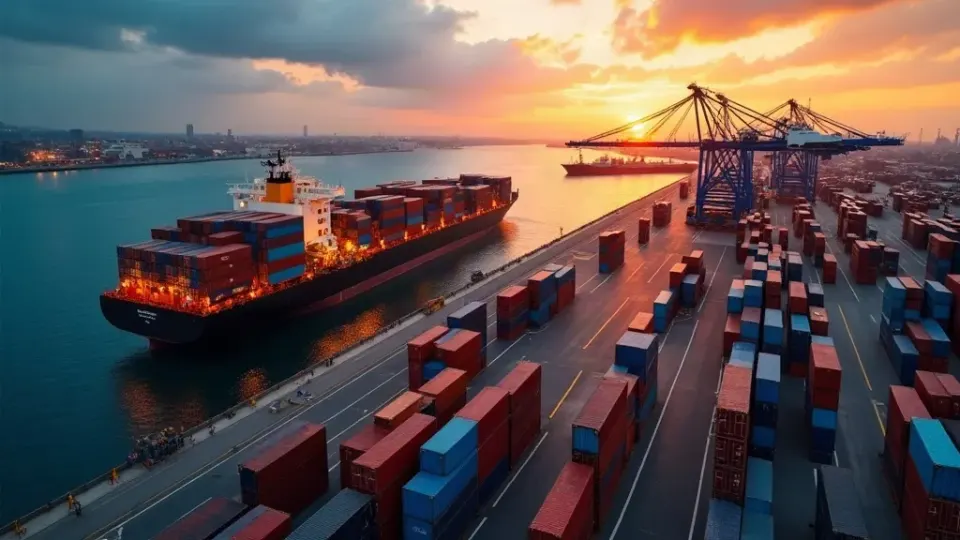
For ecommerce operators, the defining operational challenge heading into Q4 2026 is no longer logistics volatility — it is the real cost of where products are made. A tariff schedule that has lurched through multiple revisions since Section 301 duties were first layered onto Chinese goods in 2018 has created a sourcing environment that is, as one industry analysis puts it, "simultaneously more expensive and more uncertain than at any point in the past decade."
The burden is not uniform. Apparel and footwear sourced from China carry effective combined duty rates — Section 301 plus standard MFN duties — that "frequently land between 30% and 45% depending on construction and material." Furniture and home goods, a core category for many Shopify and WooCommerce stores, remained heavily exposed throughout 2025 and into 2026. Consumer electronics face a patchwork of exclusions and elevated rates depending on product class.
The Biden administration added new tranches in May 2024, including 100% tariffs on Chinese-made electric vehicles and 50% duties on solar cells, alongside elevated rates on steel, aluminum, and select medical goods. The Trump administration, returning to office in January 2025, moved to extend and in some categories expand that posture.
The Southeast Asia Workaround Is Fraying
The conventional response — diversifying manufacturing into Vietnam, Bangladesh, Indonesia, and Cambodia — is showing structural strain in 2026 for reasons the public record documents clearly.
U.S. Customs and Border Protection has significantly increased enforcement actions targeting goods routed through third countries to obscure Chinese origin, with CBP citing "apparel, footwear, and electronics as high-risk categories for tariff evasion via transshipment." Brands sourcing from Vietnamese factories that use Chinese-origin inputs now face origin determination risk that is, as the source puts it, "no longer theoretical."
Capacity has also tightened. Sourcing consultancy Qima, which publishes quarterly supplier audit data, has noted "extended lead times and quality-control challenges at factories absorbing significant new order volume" in Vietnam and Bangladesh. And the Trump administration signaled in early 2025 that it was reviewing duty treatment for goods from Vietnam and Cambodia, citing trade deficit and transshipment concerns — a review that could eliminate the cost advantage that made Southeast Asian diversification attractive in the first place.
How Large Platforms Are Responding
Amazon's structural response has been visible in its financials. The company's 2025 annual report showed that third-party seller services reached 24% of net sales, growth that partly reflects brands shifting toward marketplace distribution as a hedge against direct-import cost volatility — buying domestically from importers who have already absorbed the duty rather than importing directly.
Shopify's Q2 2026 earnings call in August 2026 flagged that "merchant conversations around international sourcing complexity were elevated," with merchants "increasingly asking about tools to manage currency, duties, and landed cost transparency — a shift in conversation from prior years when checkout conversion dominated merchant support requests."
The Mid-Market Squeeze
Smaller operators face a structural disadvantage. A brand doing $8 million in annual revenue does not have the legal resources to navigate HTS classification disputes, the volume to negotiate dedicated factory capacity in a new country, or the working capital to absorb a 25-point swing in landed cost while repositioning its sourcing.
Three pressure points are worth watching closely for smaller stores:
- De minimis reform: The Trump administration issued an executive order in February 2025 suspending de minimis treatment for Chinese-origin goods, ending the $800 duty-free threshold that had given platforms like Temu and Shein a structural price advantage over U.S.-based stores. The suspension has faced legal and administrative back-and-forth, but the direction is "clearly toward elimination." For U.S.-based stores that have been competing against duty-free direct-from-China shipments, removal of de minimis is described as "a genuine competitive relief — but it does not solve the underlying cost of their own Chinese-origin sourcing."
- Landed cost transparency: Platforms including Global-e and Zonos have built businesses around making landed cost calculable and displayable at checkout — a capability that is "moving from enterprise-only to mid-market expectation."
- Nearshoring: The Reshoring Initiative published data in 2025 showing a continued increase in announced nearshoring investments in Mexico. For some product categories, "Mexican production is now cost-competitive with Southeast Asia on a landed-cost basis when duties are included in the calculation."
The Margin Modeling Shift
Perhaps the most telling behavioral shift is in how performance marketing agencies are now approaching client conversations. Agencies running performance marketing for mid-market DTC brands report — a pattern visible in published case studies and conference presentations from ShipBob, Klaviyo, and others — that "client conversations increasingly start with landed cost and contribution margin before moving to customer acquisition cost." The source notes: "That sequencing shift is new. As recently as 2022, many mid-market brands were optimizing customer acquisition without a clear model of their fully-loaded product cost."
The National Retail Federation, the U.S. Fashion Industry Association, and the Consumer Technology Association have argued that tariffs function as a consumer tax that "inflate prices, suppress consumer demand at the margin, and create operational complexity that falls disproportionately on smaller operators." Domestic manufacturing advocates including the Reshoring Initiative and the Alliance for American Manufacturing counter that the tariff pressure is "producing a genuine structural realignment" and that short-term cost pain is the price of a more resilient supply base.
For mid-market operators, the practical steps before the holiday peak are clear if not easy: audit HTS classifications for potential misclassification savings, model landed cost at the SKU level rather than the order level, track de minimis developments as a potential margin recovery event, and ensure cross-border checkout is displaying duties and taxes accurately.
Prepared with AI assistance by Endata and reviewed by the editorial team.