UGC vs. Brand Film: How DTC Brands Are Splitting Their Creative Budgets in Fall 2026
DTC brands are wrestling with a defining creative budget question this fall: invest in polished brand films or spread dollars across high-volume user-generated content? Data from Meta, Kantar, Northbeam, and platform operators points toward a category-specific answer — and suggests the brands winning are treating both formats as complementary, not competing.

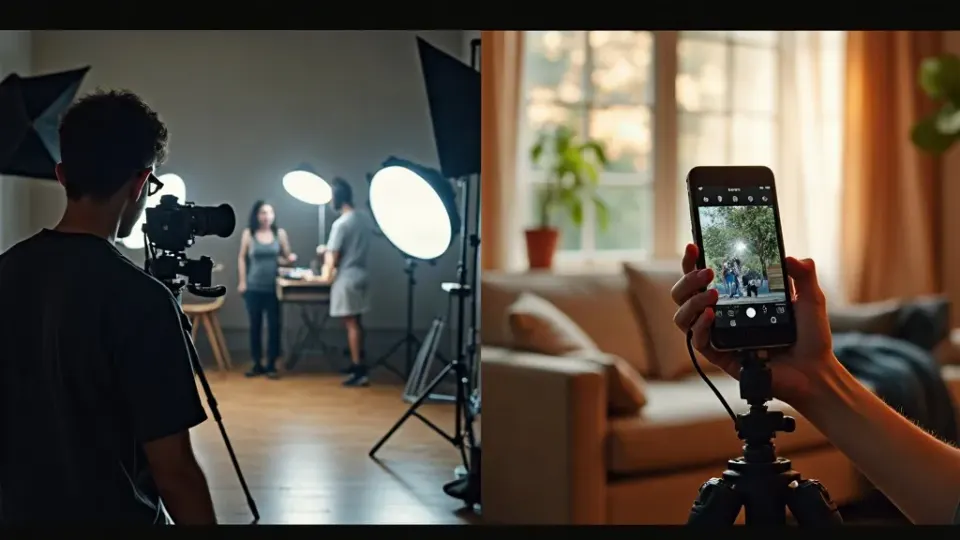
Walk into any DTC brand offsite, agency pitch, or creative retrospective this fall and you'll likely land in the same argument: should a constrained creative budget go toward a single high-production brand film, or be spread across dozens of creator-made UGC clips and let the algorithm pick winners? After years of debate, the industry still hasn't agreed — but the evidence on both sides is now sharp enough to inform a real decision.
What the Data Says About UGC
The quantitative case for UGC has strengthened considerably. Meta's Creative Guidance documentation, updated in 2025, continues to emphasize that ads featuring authentic, lo-fi creative formats frequently outperform studio-produced equivalents on cost-per-result metrics inside its auction system. Separately, Kantar's 2025 Creative Effectiveness report found that relatability and authenticity signals in video advertising correlate positively with brand recall among younger cohorts.
DTC operator and advisor Nik Sharma, whose newsletter and public commentary are widely followed in the space, has written and spoken repeatedly about the primacy of volume and iteration in creative. His public framing, consistent across his newsletter and podcast appearances through 2025 and into 2026, is that the brands winning on paid social are the ones with creative pipeline depth, not creative prestige.
Ad fatigue data adds another structural argument for UGC volume. Northbeam, the media measurement platform used widely by DTC brands, has published findings noting that creative fatigue — measured as declining ROAS on specific creative assets over time — is one of the most consistent patterns in its customer data. A single brand film, however well-produced, exhausts its audience faster than a library of thirty creator variations covering the same product claim. Meta's Blueprint training materials and agency partner communications have consistently recommended creative refresh cycles that most brands cannot sustain with production-heavy output alone.
AI creative platform Pencil has built its product thesis around this problem, arguing in public materials that brands losing on paid social are running too few creative variants, and publishing case studies claiming meaningful ROAS improvements for brands that increase variant count — a claim covered by AdWeek and Marketing Brew.
The Case for Brand Film Isn't Dead
The brand film argument is more qualitative but not without documented support. Jones Road Beauty, the cosmetics brand founded by Bobbi Brown, has been publicly explicit about investing in longer-form storytelling content as a brand identity strategy. Brown discussed the brand's content philosophy in multiple interviews during 2024 and 2025, emphasizing that video work anchoring the brand's voice was not evaluated purely on direct-response return.
Olive oil brand Graza similarly built early awareness through a distinctive visual identity and deliberate creative choices — cited in a 2024 Modern Retail profile — as evidence that brand investment pays in category distinction even when it's hard to attribute directly to a purchase. Ritual, the vitamin brand, has maintained a visually consistent and production-forward creative identity, a choice its marketing leadership has discussed as intentional brand stewardship rather than a media efficiency decision.
Operators in trust-dependent categories — supplements, personal care, premium food — have argued in trade coverage that lo-fi UGC can actually damage conversion for their audiences, where a consumer's first question is whether the product is legitimate.
TikTok Shop Is Reshaping the Format Debate
TikTok Shop has introduced a genuinely new variable. TikTok's creator marketplace data, shared in trade briefings and covered by Modern Retail and Digiday through early 2026, shows that top-performing content driving TikTok Shop conversions is overwhelmingly creator-native — unscripted, low-production, product-demonstration video. That format is structurally incompatible with traditional brand film aesthetics.
Brands that have committed to TikTok Shop as a revenue channel in beauty and home goods have by practical necessity shifted creative budgets toward creator content. The platform's affiliate commission structure further reduces the need for brand-produced UGC proxies. However, TikTok's ongoing regulatory uncertainty in the United States — its legal status remained a live operational risk as of late 2026 — has made some operators reluctant to fully reallocate creative budgets toward a format tied to a single platform with structural risk, according to coverage by The Wall Street Journal, Bloomberg, and Digiday.
What Platforms and Agencies Are Recommending
UGC platform Minisocial has published case study data arguing that brands using its creator network outperform benchmarks on thumb-stop rate and hook rate on Meta and TikTok, framing UGC as a volume layer that feeds testing rather than a replacement for brand creative.
Creative-as-a-service platform Superside has taken a different angle, arguing in its 2025 State of Creative Operations report that the real problem is creative velocity — and that brands able to produce both formats at scale consistently win. The report cited creative bottlenecks as a primary growth constraint for scaling brands. Performance creative agency MuteSix has published case work showing mixed-format creative strategies — combining UGC hooks with branded mid-funnel content — outperforming either format in isolation on Meta campaigns for consumer brands.
What This Means for Your Business
The public record supports a nuanced, category-specific frame rather than a universal answer. Brands in trust-deficit or high-consideration premium categories appear to benefit from production investment that signals credibility and aids mid-to-lower-funnel conversion. Brands competing on social-native platforms face structural pressure toward creator-native formats regardless of brand preference.
What the data does not support — and what operators said explicitly at the 2026 Shoptalk conference — is a single creative format winning universally across categories, audience ages, and platform contexts. The brands appearing to resolve this most successfully are those treating brand film and UGC as complementary budget lines rather than competing ones, and building creative infrastructure capable of producing both at sufficient volume to stay ahead of ad fatigue. That is a harder operational challenge than picking a side — but based on the documented evidence, it is closer to the right answer.
Prepared with AI assistance by Endata and reviewed by the editorial team.